GLP-1 · Over 50 · By Alon Laniado
Can You Lose Weight on GLP-1 After 50?
Yes — but the rules change. Your protein needs are higher, muscle loss is a bigger risk, and bone health matters more than you think. Here's what you need to know.

Yes — but the rules change. Your protein needs are higher, muscle loss is a bigger risk, and bone health matters more than you think. Here's what you need to know.
After 50, your metabolism is slower, your muscles are harder to maintain, and your hormones are working against you — which means GLP-1 weight loss requires a fundamentally different approach than it does for younger adults. The medication works the same way at any age: it reduces appetite and improves insulin sensitivity. But what happens to your body during that weight loss is very different at 55 than at 35.
Sarcopenia — age-related muscle loss — is already happening. Starting around age 30, you lose 3-8% of muscle mass per decade. By 50, this accelerates. Add GLP-1 medication, which can cause up to 40% of weight lost to come from lean mass, and you have a compounding problem: you're losing muscle from two directions simultaneously.
Hormonal shifts change the equation. Women going through or past menopause have declining estrogen, which accelerates both muscle and bone loss. Men experience gradual testosterone decline. Both make it harder to hold onto muscle during the caloric deficit that GLP-1 creates. This doesn't mean the medication is a bad idea — it means you need to be more strategic about how you use it.
The biggest risk is losing so much muscle that you end up weaker, with a slower metabolism, and more likely to regain the weight — even though the scale went down. This is what researchers call "sarcopenic obesity risk," and it's the quiet danger of aggressive weight loss in older adults.
Here's how it compounds: you start GLP-1 medication, your appetite drops, you eat less (often way less), and you don't prioritize protein or resistance training. You lose 30 pounds — but 12 of those pounds are muscle. Your resting metabolism drops. When you eventually stop the medication or your appetite returns, your body now burns fewer calories than before. The weight comes back, but as fat, not muscle. You end up at the same weight but with a worse body composition.
This is not inevitable. It's what happens when GLP-1 is treated as a standalone solution rather than a window of opportunity to rebuild your nutrition and exercise habits. With the right approach — which we'll get into — you can lose fat while preserving most of your muscle. Deep dive on GLP-1 and muscle loss →
After 50, you need to track more than weight. Strength levels, how your clothes fit, energy throughout the day, and ideally body composition measurements (DEXA scan, or even just waist and hip measurements) tell a much more complete story.
Adults over 50 on GLP-1 need 0.8-1.0g of protein per pound of body weight — about 20-30% more than younger adults — because your muscles are less efficient at using the protein you eat. This is called anabolic resistance: at 30, eating 20g of protein can trigger muscle protein synthesis. By 55, you may need 35-40g to get the same muscle-building response.
For a 165-pound person, that's 132-165g of protein daily. Across three meals, each one needs roughly 44-55g. That's hard to hit when GLP-1 is suppressing your appetite — which is exactly why it requires planning rather than hoping.
Start with the protein (chicken breast, fish, Greek yogurt, eggs, cottage cheese), then add fiber and complex carbs around it. If you plan meals "protein first," you're much more likely to hit your target even with a reduced appetite.
When appetite is low and chewing feels like work, a whey or casein protein shake (25-40g protein, 150-250 cal) bridges the gap. Whey is especially effective for older adults because it's leucine-rich — the amino acid that triggers muscle synthesis. Full protein guide →
Don't save it all for dinner. Due to anabolic resistance, your body can't efficiently process one massive protein dose. Three meals with 40-50g each triggers muscle protein synthesis three separate times per day. This is more important after 50 than at any other age.
Resistance training is the single most important thing you can do for your long-term health on GLP-1 after 50 — more important than the medication itself. It's the only exercise modality that directly signals your body to preserve muscle during weight loss. Walking, swimming, and cycling are great for cardiovascular health, but they don't send the "keep this muscle" signal that loading your muscles under resistance does.
There's another benefit that matters enormously after 50: bone density. Weight-bearing resistance exercise stimulates bone remodeling. Since rapid weight loss (from any cause) can reduce bone mineral density, and post-menopausal women are already at elevated risk, strength training directly counteracts one of the key risks of GLP-1 weight loss. Full strength training guide →
You don't need to deadlift 200 pounds. Bodyweight squats, wall push-ups, resistance bands, and light dumbbells all count. What matters is progressively challenging your muscles 2-3 times per week. Consistency beats intensity, especially when starting after 50.
Squats (or leg presses), rows, chest presses, and deadlifts work multiple muscle groups simultaneously. For time-constrained adults, 4-5 compound exercises per session is enough to stimulate meaningful muscle preservation.
Daily walking supports cardiovascular health, joint mobility, and calorie burn without taxing recovery. It's the perfect complement to strength training, not a replacement. Balance is also a factor after 50 — walking on varied terrain helps.
The most dangerous mistake is celebrating the appetite suppression by eating as little as possible. When GLP-1 drops your appetite to near zero, many people over 50 end up eating 700-1,000 calories daily. At this level, muscle loss accelerates dramatically regardless of protein percentage — your body simply can't maintain tissue on starvation-level intake.
Minimum 1,200-1,400 calories daily, even when you're not hungry. This sounds counterintuitive on a weight loss medication, but the goal is fat loss, not weight loss at any cost. Below 1,200, you're losing muscle, bone density, and metabolic capacity.
Rapid weight loss reduces bone mineral density. After 50, you need 1,200mg calcium and 1,000-2,000 IU vitamin D daily. Most people don't get this from food alone, especially with reduced appetite. A supplement is usually necessary. Ask your doctor to check your levels.
Many GLP-1 users report zero appetite in the morning. But skipping breakfast means you're trying to fit 130-160g of protein into two meals — and that's nearly impossible for most people. Even a small protein-rich breakfast (Greek yogurt + protein powder, or eggs) makes hitting daily targets realistic.
B12, iron, magnesium, and folate deficiencies are more common when eating less food overall. A simple blood panel every 6 months catches gaps before they become problems. This is especially important for adults over 50 whose absorption efficiency is already declining.
These are real meals from FitMate members — each hitting the protein targets that matter for adults over 50. Notice the emphasis on whole food proteins with fiber-rich sides. These are realistic, not aspirational.
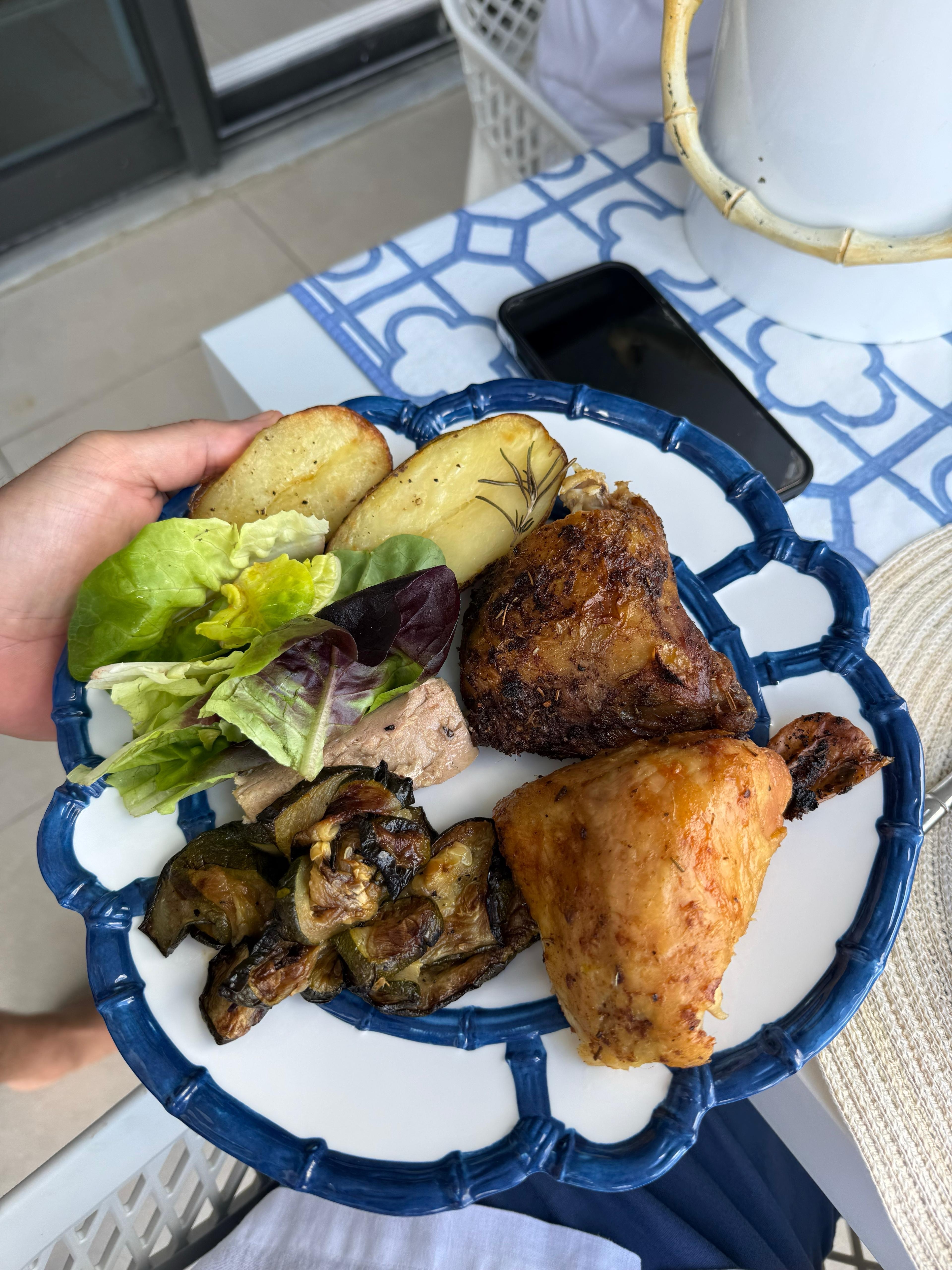
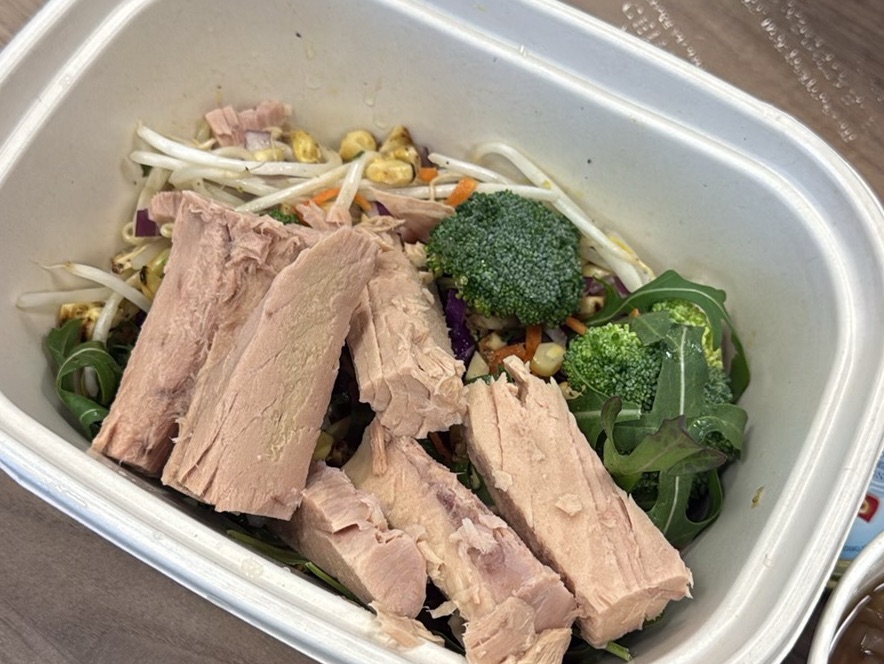
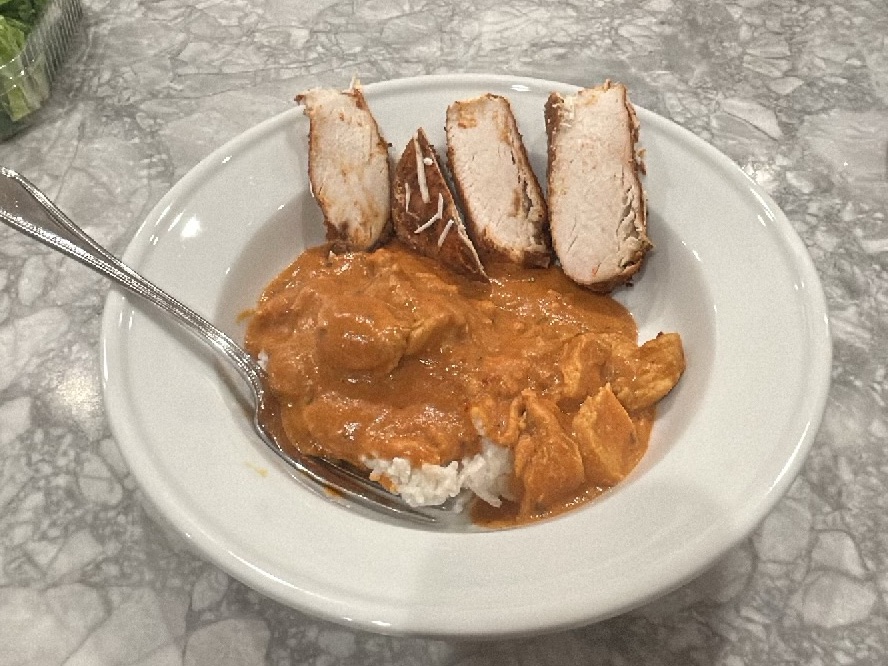
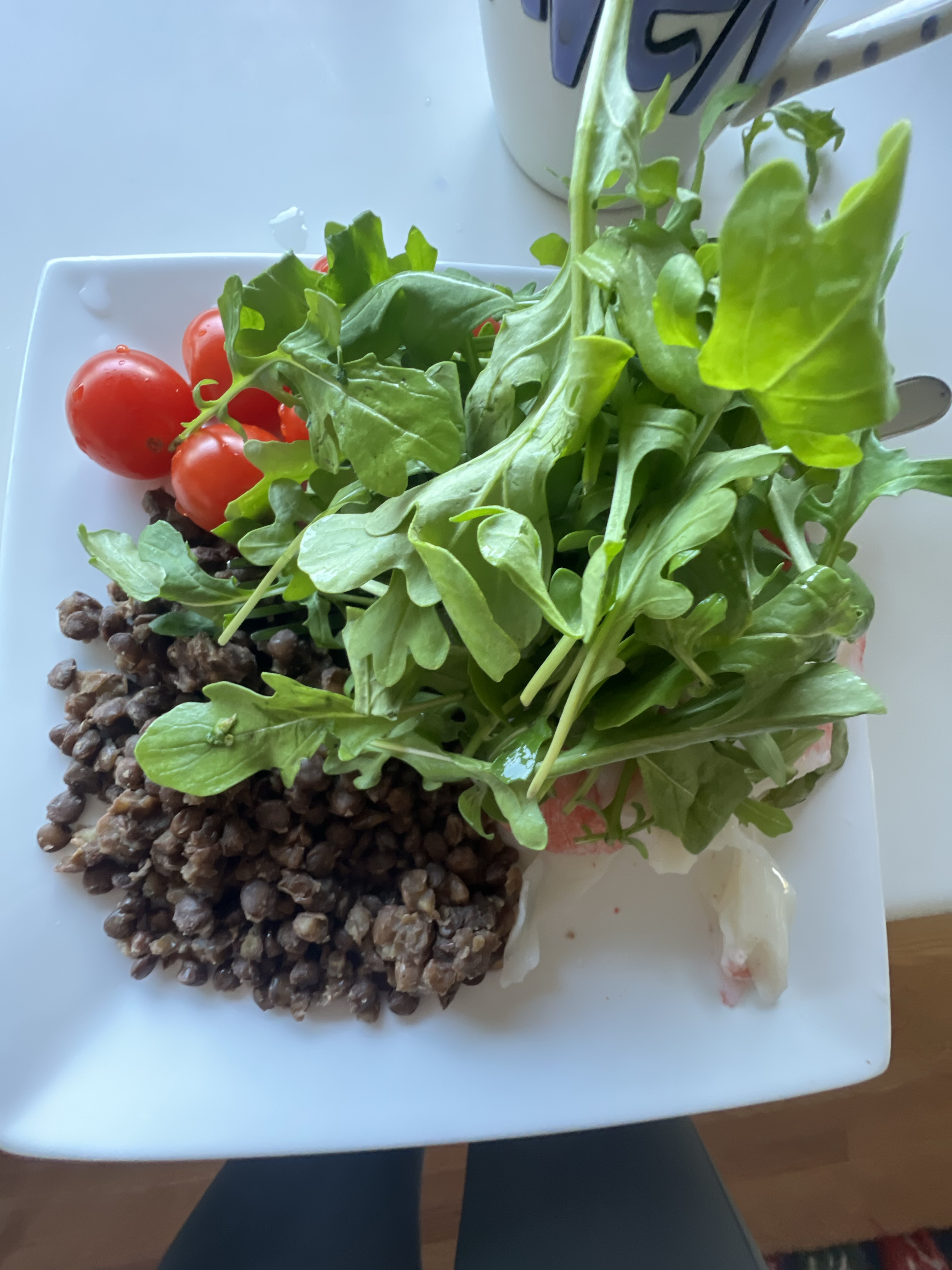
Every meal has 36-48g of protein — hitting the per-meal threshold needed for muscle protein synthesis with anabolic resistance. Calories stay in the 320-500 range. And fiber comes from whole food sources, not supplements. This is what "eating enough while losing weight" actually looks like.
FitMate Coach builds personalized nutrition plans — AI-powered meal tracking, protein monitoring, and 1-on-1 coaching adapted to your age and goals.
Get Started →Get the latest research on weight loss, GLP-1, and sustainable eating habits — no fluff.