If your meals contain sufficient protein (30–50g per meal) and fiber (8–12g per meal), most people feel full for 4–5 hours. Hunger between meals is usually a sign that the previous meal did not contain enough protein or fiber — not that you need more eating occasions.
Three Meals a Day vs. Grazing: Which Is Better for Weight Loss?
What the research actually shows about meal frequency, satiety hormones, and why fewer meals can mean less hunger.
The Core Answer
Eating three structured meals per day — with one or two planned snacks — is more effective for weight loss than grazing on many smaller meals throughout the day. Research shows that fewer, larger meals increase satiety, make it easier to hit protein and fiber targets, and reduce untracked calorie intake. Grazing tends to leave people hungrier, less aware of what they've consumed, and more likely to overeat.
Why Grazing Doesn't Work the Way People Think
For years, the conventional advice was to eat five or six small meals a day. The theory was simple: frequent eating keeps your metabolism active and prevents hunger from building up.
The evidence does not support this.
A study from Purdue University compared two groups eating the exact same calories and the same food — split across either three meals or six meals per day. The three-meal group reported significantly greater fullness throughout the day. The six-meal group felt less full. Researchers also measured PYY, a gut hormone that signals satiety — it was higher with three meals and lower with six.
A metabolic chamber study from Maastricht University found similar results: three meals per day led to greater satiety, lower hunger ratings, and a slight increase in resting metabolic rate compared to fourteen mini-meals — again with identical total calories.
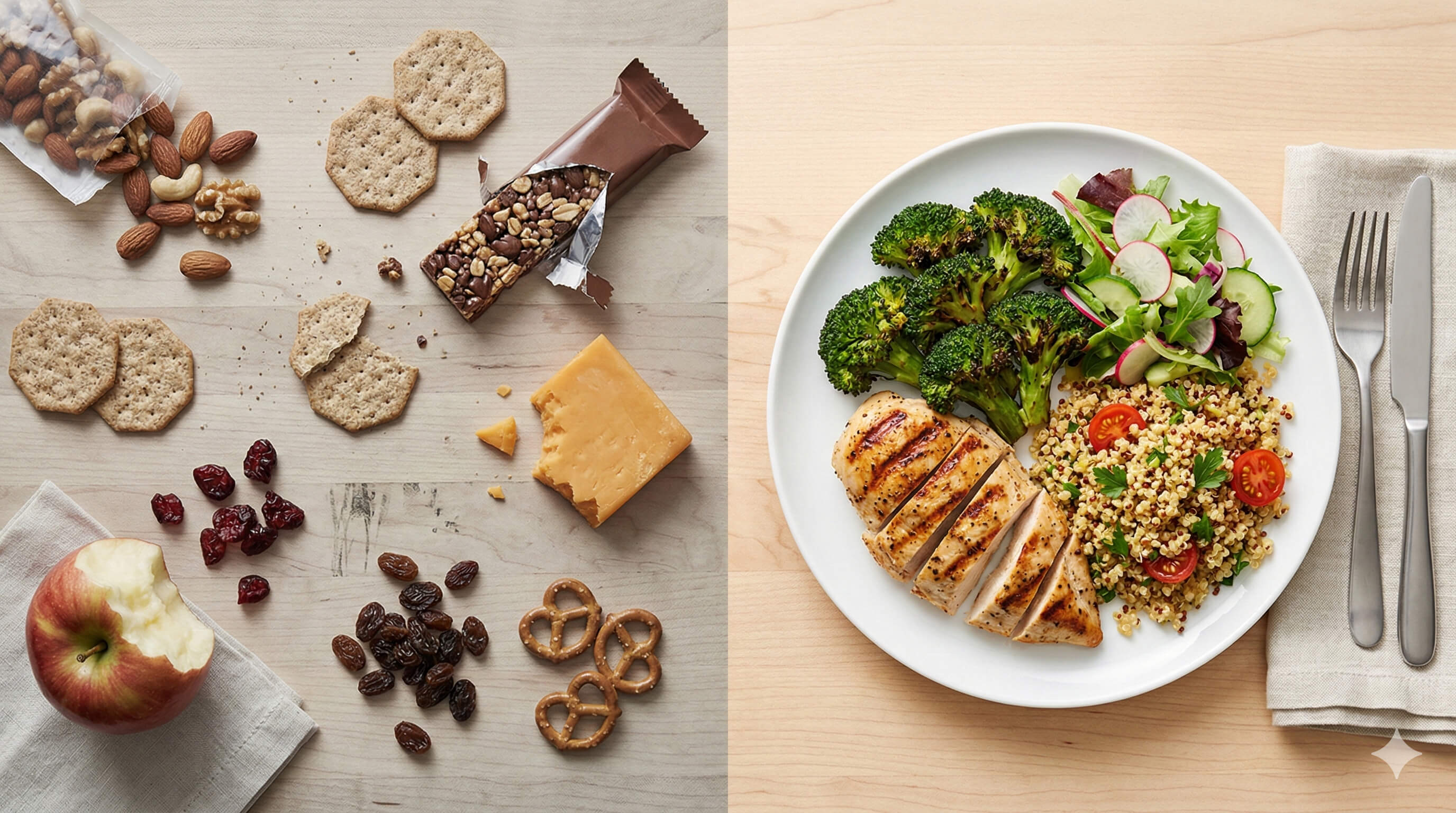
The core problem with grazing is not the number of eating occasions. It is what happens to food quality, portion awareness, and satiety when meals are fragmented.
Three Reasons Structured Meals Work Better
1. Each meal has enough room for real protein and fiber
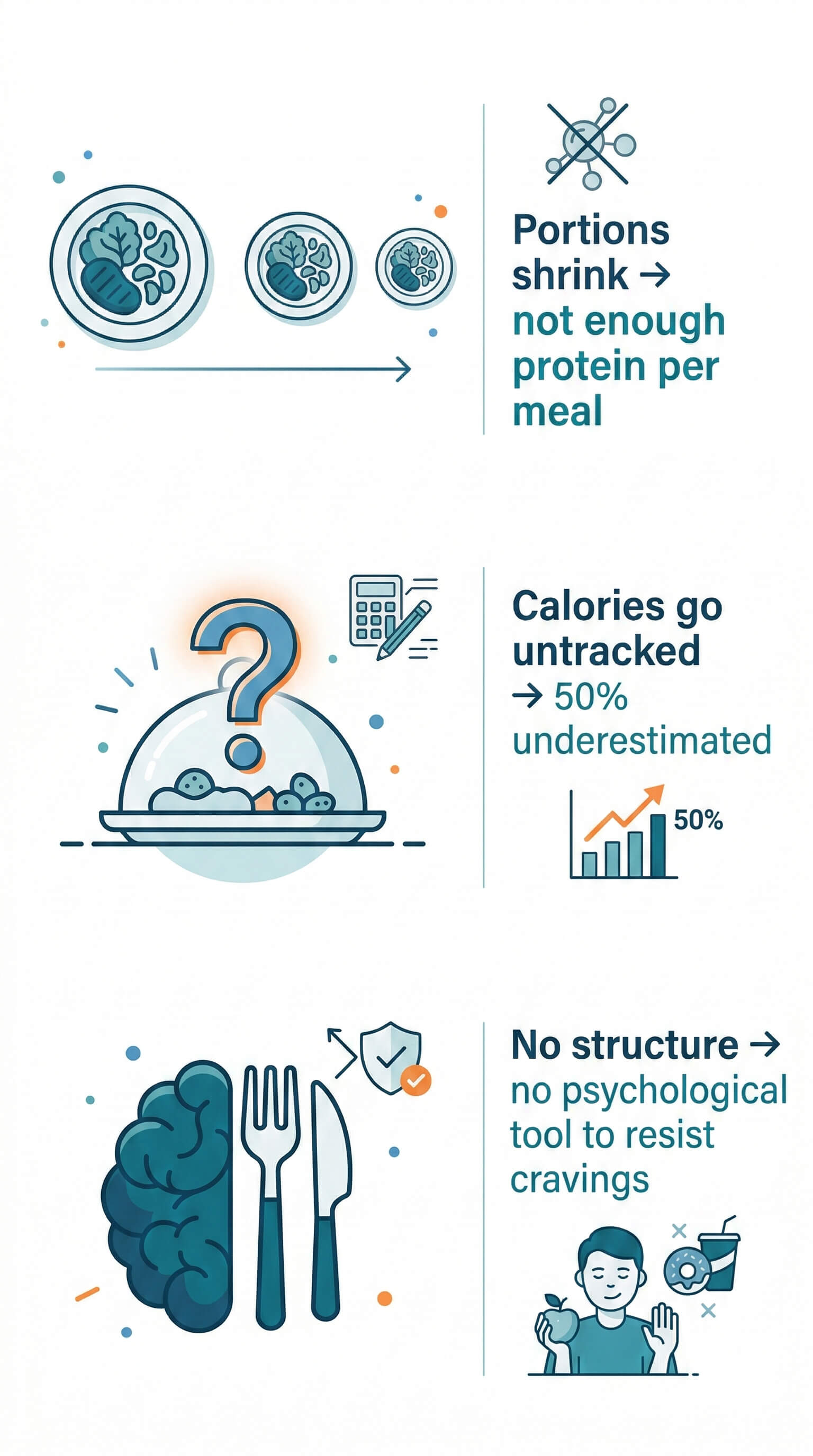
Protein and fiber are what keep you full. They send satiety signals to your brain and slow digestion. But they require a certain quantity per meal to be effective. When food is spread across six eating occasions, each portion is too small to deliver meaningful satiety. A meal with 10–15 grams of protein does not trigger the same hormonal fullness response as one with 35–45 grams.
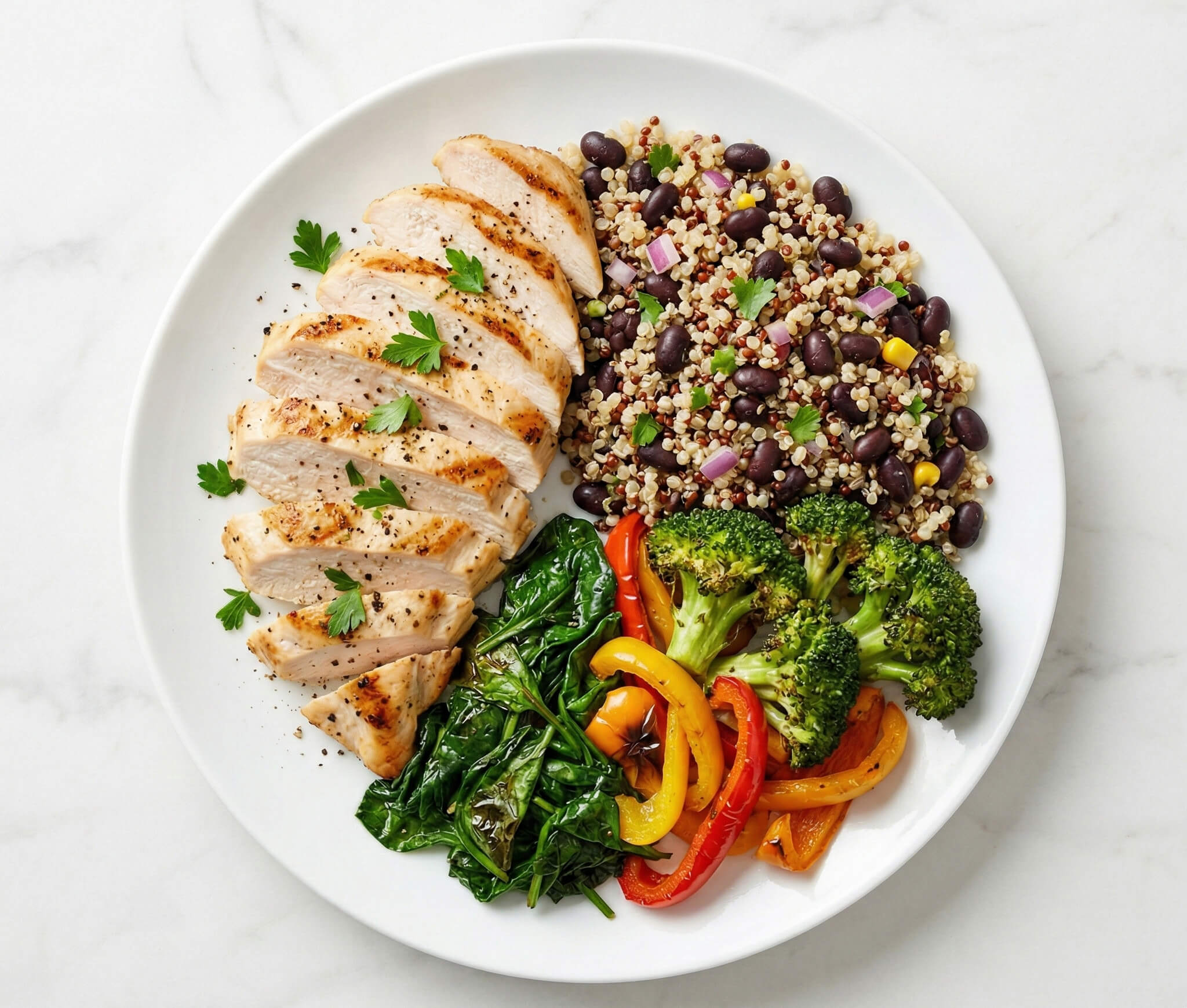
Three meals per day gives you the space to build a plate that actually satisfies you — roughly one-third protein, a fist-sized portion of fiber-rich grains or beans, and the rest vegetables.
2. Calories are easier to track and control
Every eating occasion introduces an opportunity for untracked calories — a handful of nuts, a drizzle of oil, a coffee with cream. Research published in the journal Appetite found that people do not fully register snacks between meals, meaning they do not compensate by eating less later. They simply eat on top of what they've already consumed. Studies also show people underestimate snack calories by as much as 50%.
With three defined meals, it is far easier to know roughly what you ate and whether you stayed within your target for the day.
3. Structure creates a psychological advantage
When you know your meals are built to keep you full, you gain a mental tool for handling cravings. If a craving hits at 3pm and you know your lunch had sufficient protein and fiber, you can recognize the craving as habit or boredom — not genuine hunger. You can also tell yourself that a planned snack is coming at 4pm, making it easy to wait rather than reach for something unplanned.
This mental clarity does not exist when meals are loosely spread throughout the day with no clear structure.
What a Structured Day Looks Like
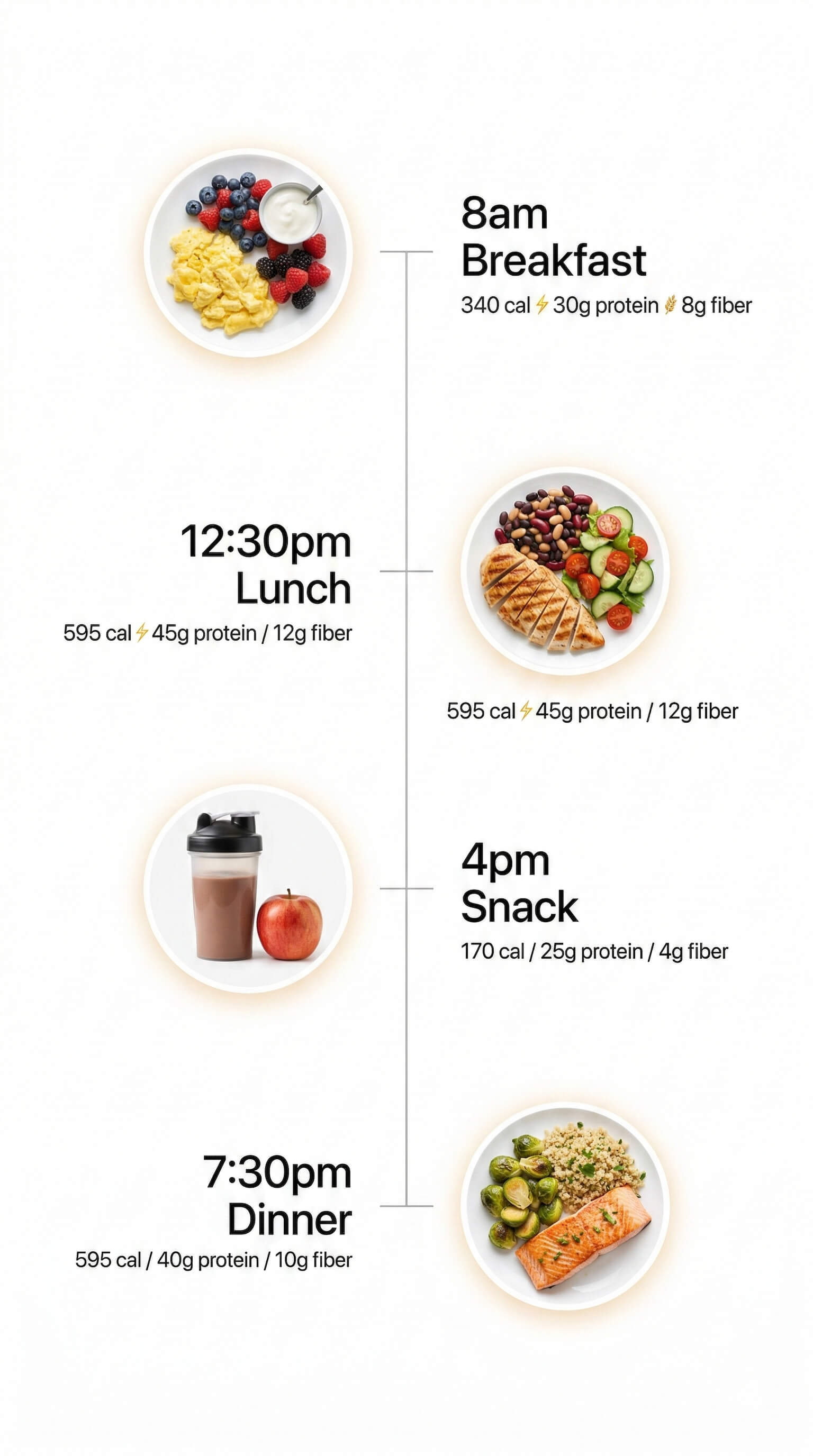
A typical effective structure looks like this:
Breakfast — protein and fiber focused (e.g., eggs, Greek yogurt, berries)
Optional mid-morning snack — only if needed, protein- or fiber-rich
Lunch — one-third protein, fist of grains/beans, rest vegetables
Afternoon snack — planned, protein-rich (e.g., protein shake, edamame, cottage cheese)
Dinner — same structure as lunch
Example split: Someone eating 1,700 calories per day with 140 grams of protein and 30 grams of fiber might split it roughly: 20% breakfast, 35% lunch, 35% dinner, and 10% for snacks. The key is that snacks are planned and intentional — not reactive grazing.
Does This Mean You Can Never Snack?
No. There is a meaningful difference between planned snacking and grazing.
A planned snack serves a purpose: it fills a gap between meals, helps hit protein targets, and is accounted for in the day's calorie budget. Examples include Greek yogurt, edamame, a protein shake, or an apple with cottage cheese.
Unplanned grazing — eating whatever is available whenever the urge strikes — is where calorie control breaks down.
The pattern among people who successfully lose weight and keep it off is consistent: fewer eating occasions, more intentional ones.
Who Is Each Approach Better For?
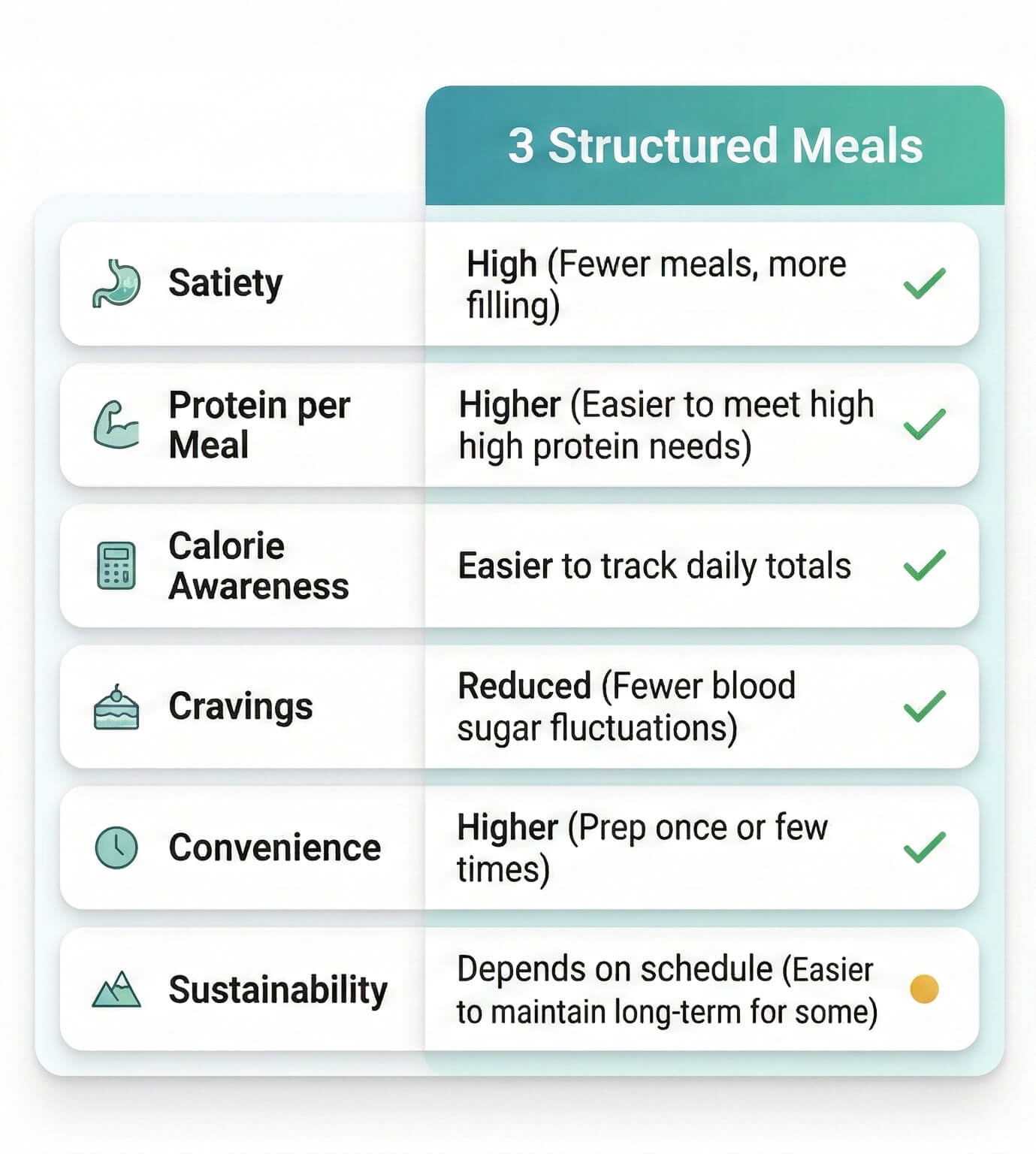
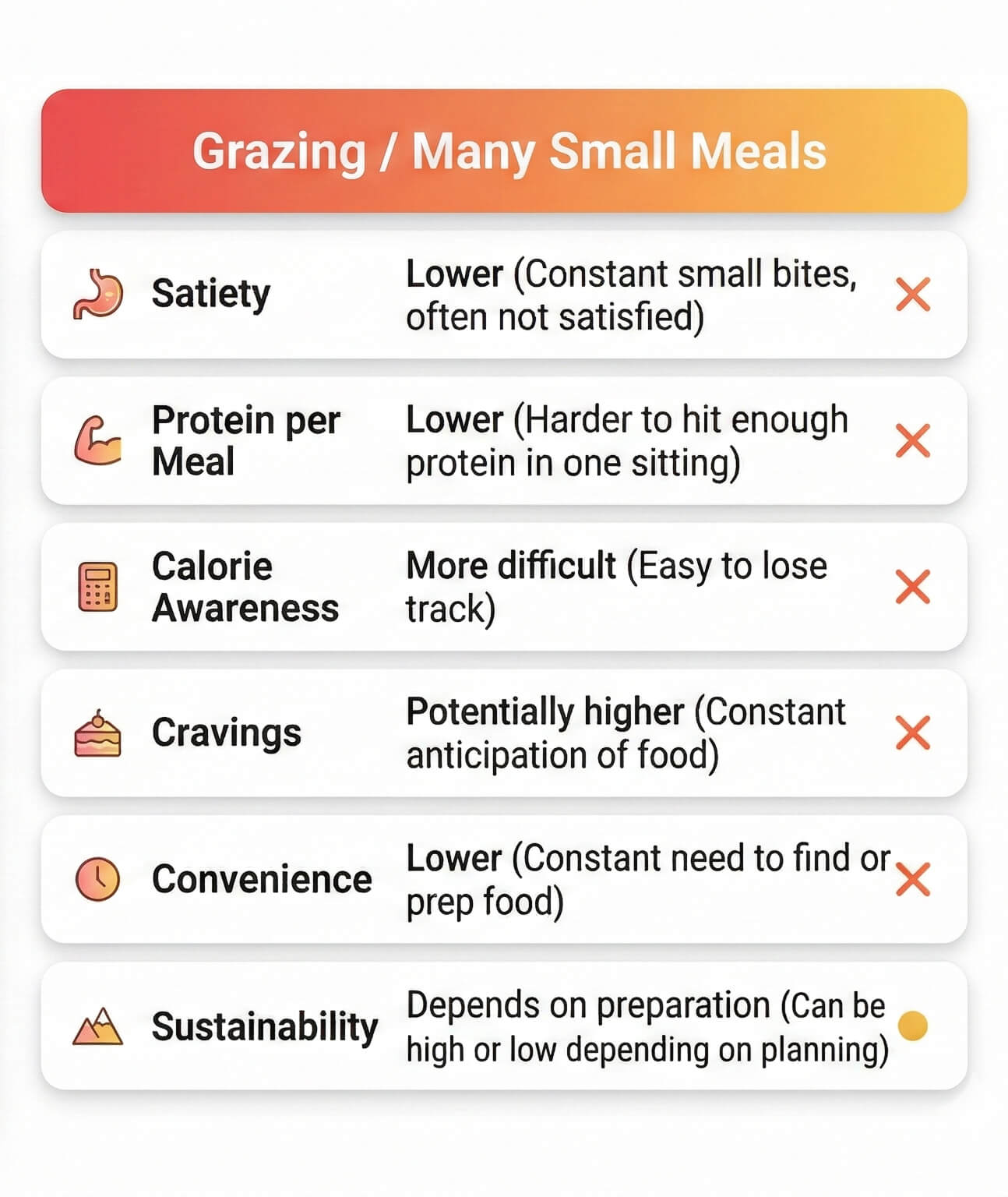
| Three Structured Meals | Grazing / Many Small Meals | |
|---|---|---|
| Satiety | Higher — meals are large enough to trigger fullness | Lower — portions too small to satisfy |
| Protein targets | Easier to hit per meal and per day | Harder — protein gets diluted across occasions |
| Calorie awareness | Easier to track and estimate | Harder — snack calories often go unregistered |
| Cravings | Reduced — structure provides psychological control | Increased — constant eating can reinforce food-seeking behavior |
| Best for | Most people trying to lose weight sustainably | People with specific medical needs requiring frequent small meals (e.g., gastroparesis, certain metabolic conditions) |
For most people pursuing weight loss, three structured meals with planned snacks is the more effective and sustainable approach.
Frequently Asked Questions
No. Research consistently shows that meal frequency does not meaningfully affect metabolic rate when total calories are equal. What matters is total calorie intake, protein intake, and food quality — not how many times you eat.
Your body adapts. Most people find that within one to two weeks of eating structured, filling meals, the constant desire to eat between meals fades. The initial adjustment period is short, especially when meals are genuinely satisfying.
In specific medical contexts — such as gastroparesis, blood sugar management for certain diabetic patients, or during pregnancy — smaller, more frequent meals may be recommended by a healthcare provider. For general weight loss in healthy adults, structured meals are more effective.
How This Applies in Practice
Understanding the science behind meal structure is one step. Applying it in real life — knowing what to eat at each meal, how to hit your protein and fiber targets, and how to handle real-world challenges like travel, eating out, and busy schedules — is where most people need support.
Related Resources
Intermittent Fasting vs. Structured Meals →
Why structured meals offer the same calorie control as IF with better sustainability
How Fitmate Coach Works →
How coaching helps you build sustainable meal structure and hit your targets
Fitmate for Busy Professionals →
How structured meals fit into a demanding schedule
Fitmate Coach Product →
See what you get with Fitmate Coach — AI meal analysis and 1-on-1 coaching
Ready to Build Better Meal Structure?
Discover how structured meals built around protein and fiber can help you lose weight without counting every calorie.
On a GLP-1 medication?
We have specialized nutrition guides for Ozempic, Wegovy & Mounjaro
Our GLP-1 guides are backed by data from 3,000+ tracked meals — covering protein targets, muscle preservation, meal timing, and more.